LIVING IN KOREA
KOREAN APARTMENT LIVING
You are viewing: Living in Korea → Korean Apartment Living → Recycling in a Korean Apartment: Bags, Local Rules, and My Sorting Robot Joke
Korean Apartment Living
Recycling in a Korean Apartment: Bags, Local Rules, and My Sorting Robot Joke
Growing up, rubbish meant walking a bag out to a bin. In Korea, it meant realising I’d run out of the right bag entirely and couldn’t take the rubbish out at all — and that “the right bag” depends on more than I first assumed.
Growing up, dealing with rubbish meant walking a bag out to a bin. In Korea, it meant realising I’d run out of the right bag entirely and couldn’t take the rubbish out at all.
Where I grew up, a large bin was just there, ready whenever you needed it. In Korea, rubbish has to go out in an official bag you’ve paid for, and running out isn’t a minor inconvenience — it’s a full stop. No bag, no rubbish out, until someone makes a trip to buy more. That specific gap between having rubbish and being allowed to dispose of it was what actually got under my skin, not the idea of paying for bags in general. Beyond the bags, the sheer number of categories for sorting recycling caught me off guard too — at one point I genuinely joked that what I really wanted was a robot to show up and sort all of it for me.
Our Own Experience
We used to live in a different part of Gyeonggi-do, and the official rubbish bags there were a different colour from the ones we use now. That surprised me — I hadn’t expected the bags themselves to change just because we’d moved to another area. My wife’s practical memory from going through that move is that when you report a change of address, it’s worth asking the local community office directly whether your existing bags can still be used, or whether you need new ones, rather than assuming either way.
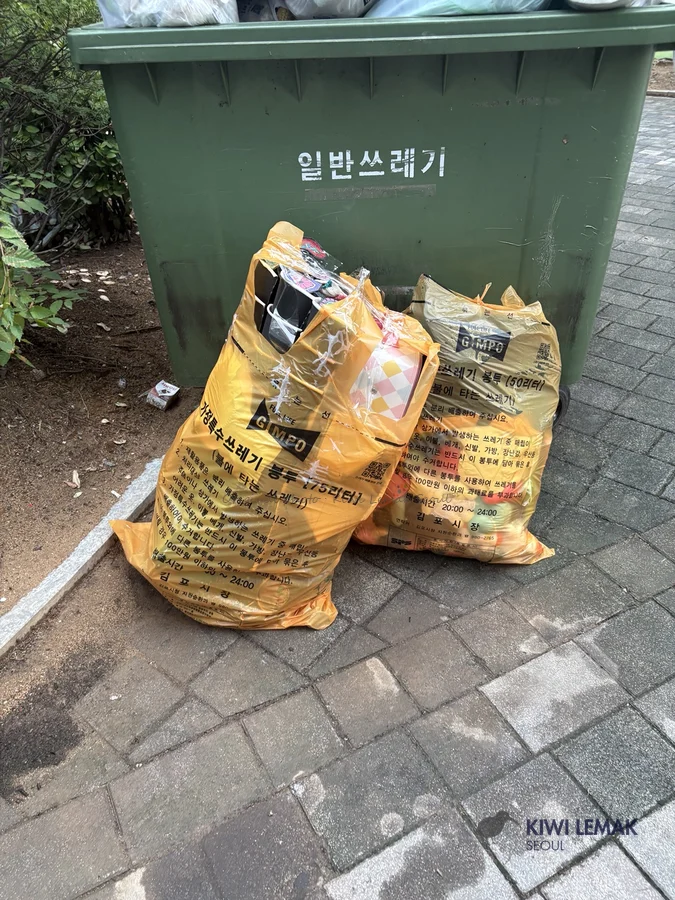
The official Gimpo-issued general waste bags we use now — a different colour from the ones we used at our previous address in Gyeonggi-do.
What Our Building Specifically Asks For
Our complex posts its own recycling signage in the collection area, breaking categories down further than a general “recycling” bin would suggest — plastic wrappers get their own separate call-out on the sign we pass most often. Paper, cans, food waste and general rubbish each have their own separate, labelled collection point in the same area. This is our building’s own layout and labelling, not a claim about how every complex in Korea organises its bins; the categories and the exact posted instructions are something worth checking at your own building rather than assuming they match ours.
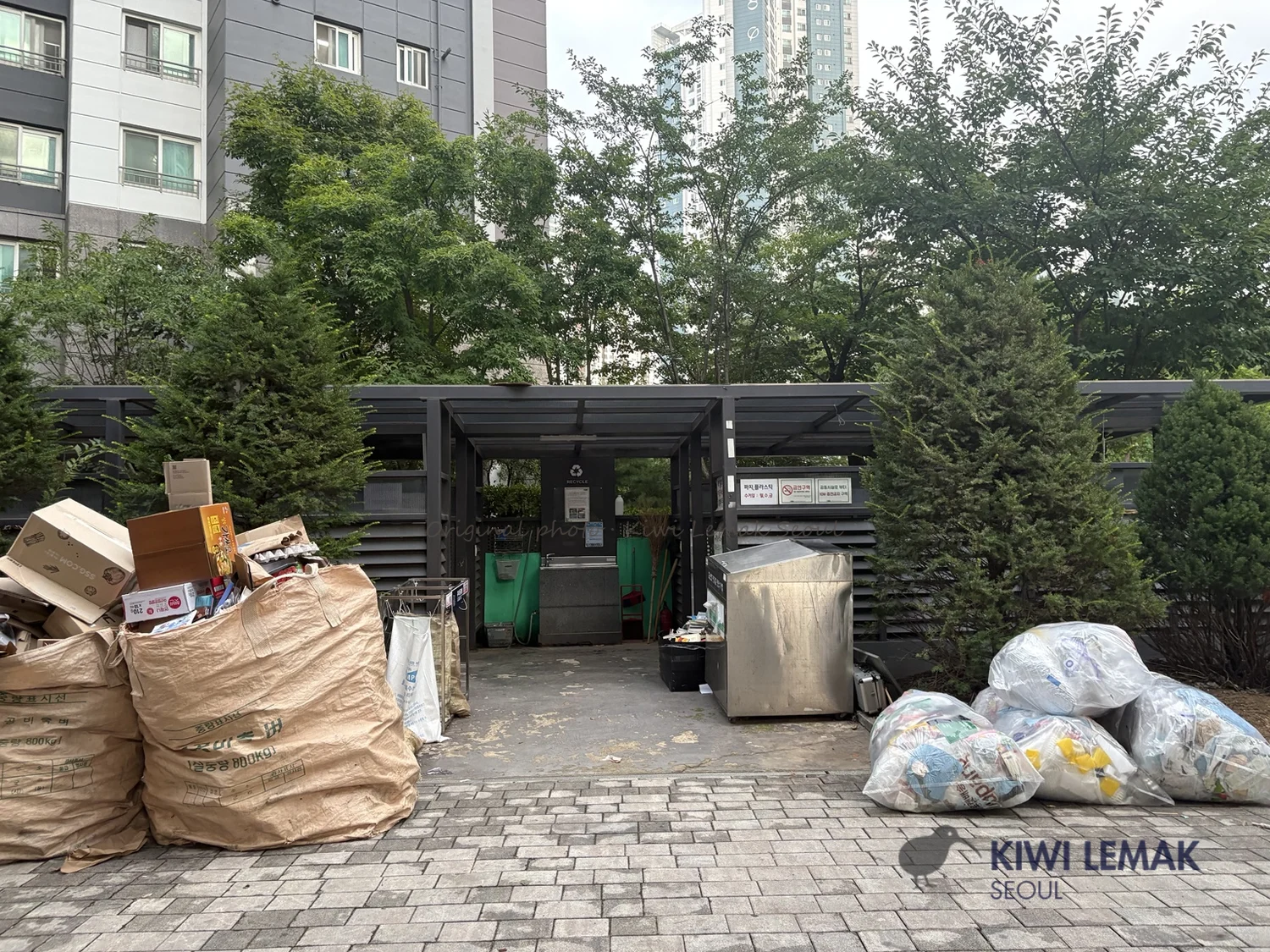
The recycling collection area in our complex — the individual sorting signs below are all from this same spot.
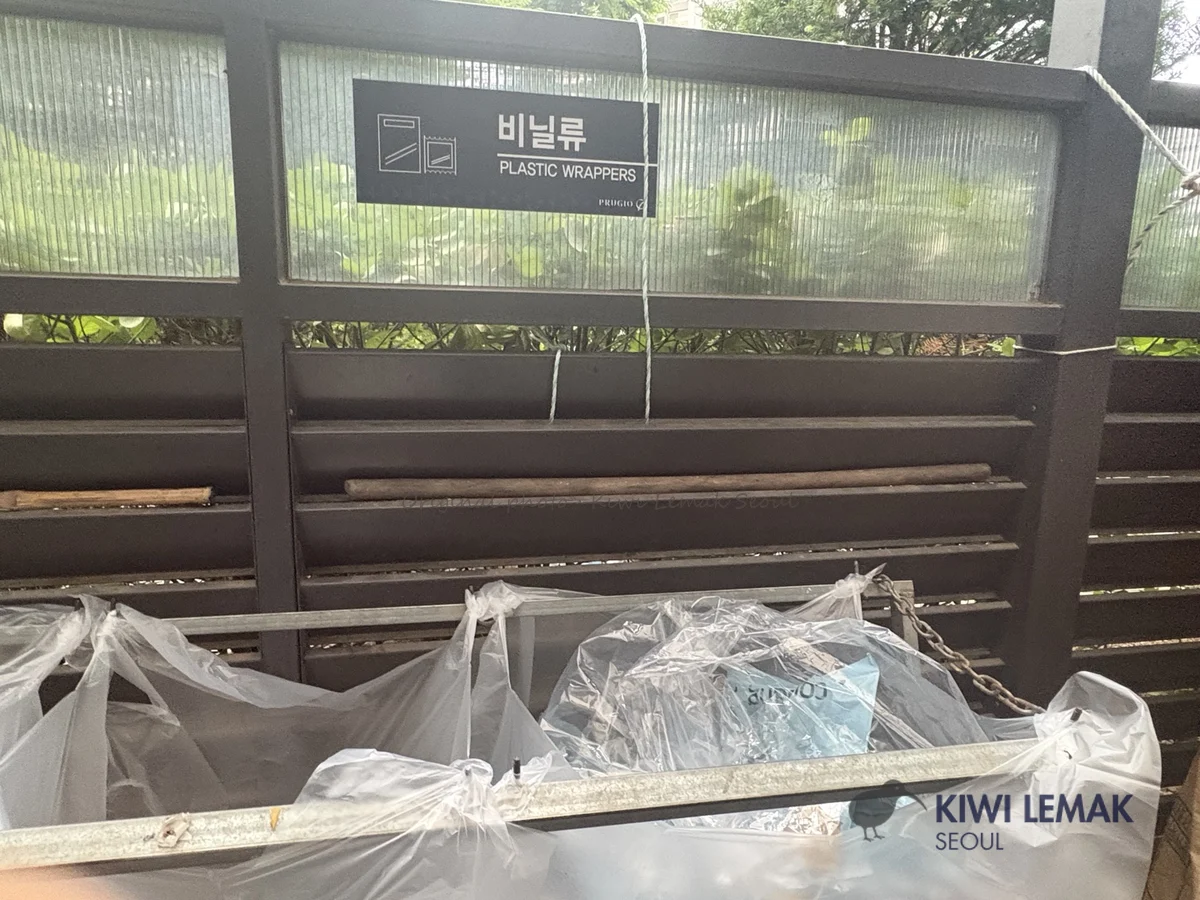
One of the sorting signs in our own complex’s recycling area — plastic wrappers get their own labelled category here.
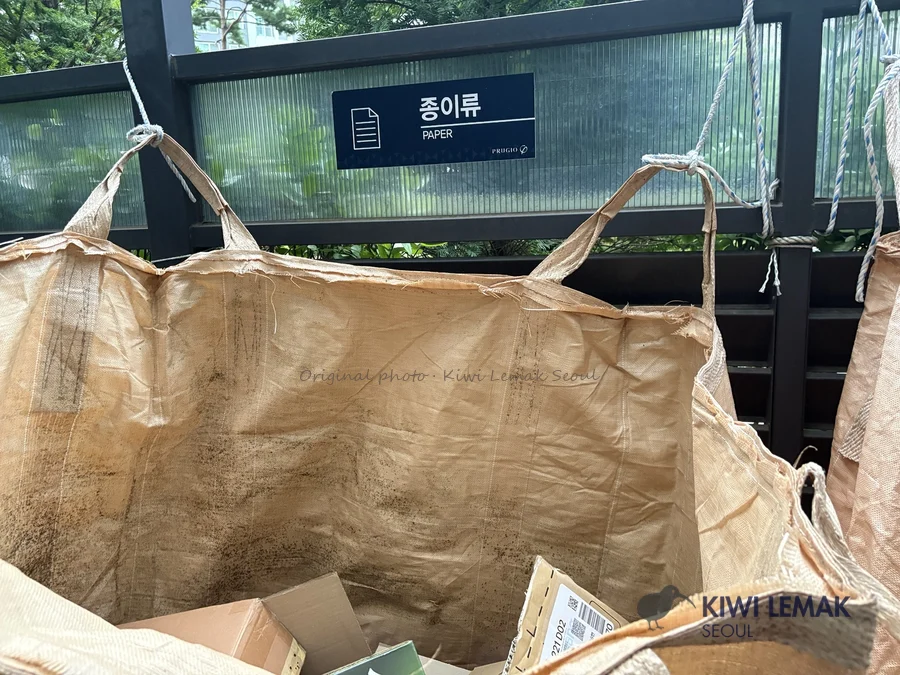
Paper gets its own labelled point too, a few steps from the plastic-wrappers sign.
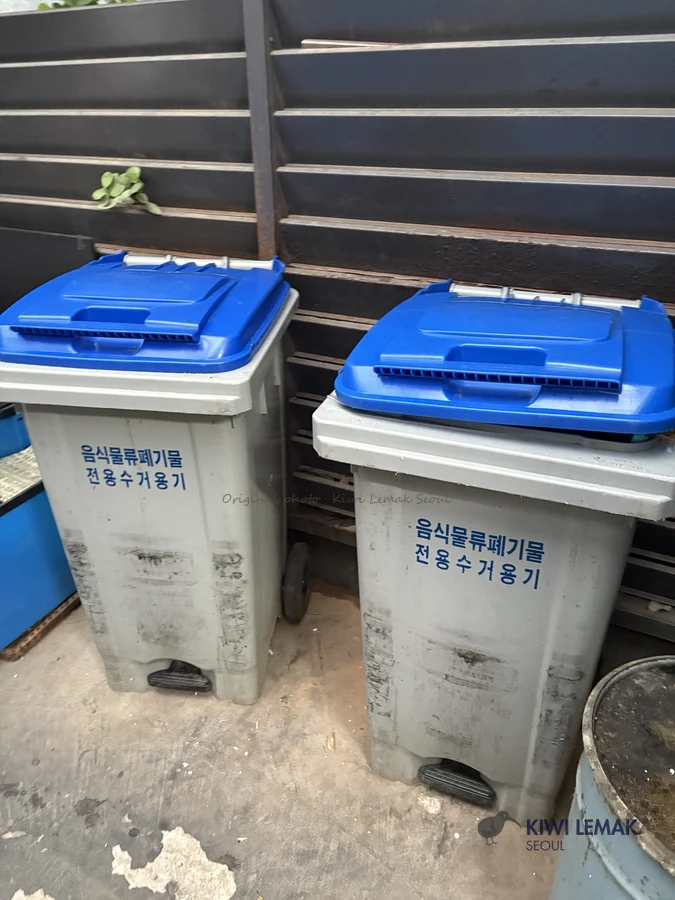
Food waste goes in a separate foot-pedal bin, not the general rubbish.
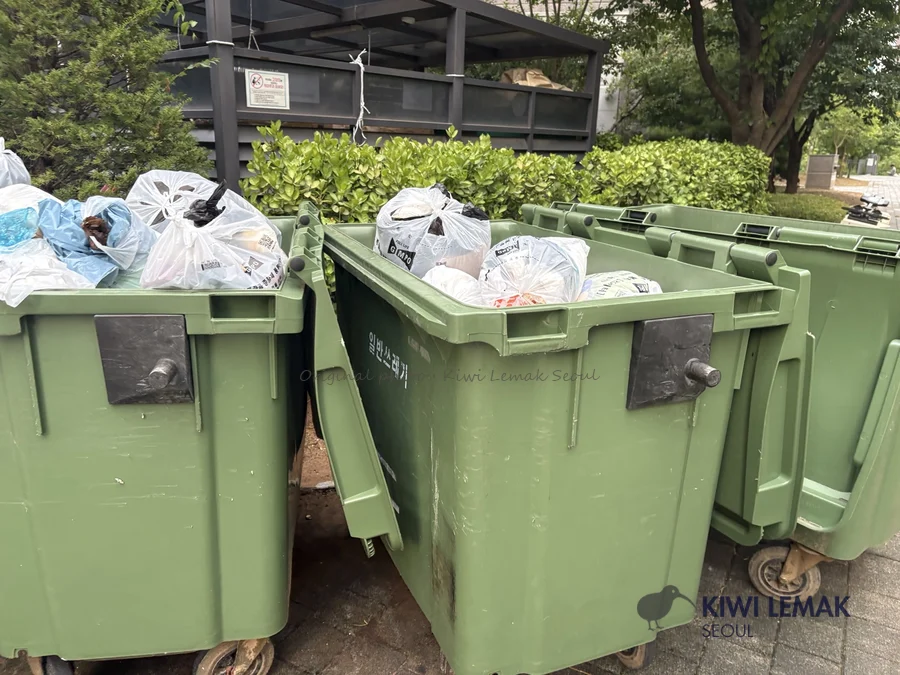
And everything that isn’t recyclable or food waste goes here, in the official paid bags covered above.
Gimpo’s Own Rules, Specifically
Beyond our own building, Gimpo City itself sets rules that go further than a general national system. Gimpo requires its own city-designated waste bags for general rubbish, rejects bags issued for other regions outright, and can fine residents for using the wrong ones — so a bag that worked at our old address genuinely would not work here. Gimpo also requires recyclables to go out in transparent bags, without needing a paid waste bag at all, which is a distinction worth knowing before you assume every category needs the same paid bag general rubbish does. If you live in Gimpo, treat this as the specific local rule to follow rather than a general Korea-wide assumption.
The General Korea System, Underneath All of That
Underneath both our building’s habits and Gimpo’s specific rules sits a nationwide system: Korea runs an official volume-based waste fee, commonly called “pay-as-you-throw,” requiring government-issued bags for general waste in most areas. That’s the general national principle. The specific bag design, price, and exact rules on top of it are set locally and do vary by area — which is exactly why our bags changed colour when we moved, and exactly why I’d tell anyone moving to a new area in Korea to check local rules directly rather than assume their old bags, or their old habits, will simply carry over.
What I’d Tell Someone Moving In
Buy your official rubbish bags before you’re down to your last one. If you move to a new area, ask the local community office directly about your existing bags rather than assuming they’ll still work — and if that new area happens to be Gimpo specifically, know that the wrong bag isn’t just unusual, it can get you fined. It’s a small administrative thing, but it saves you the exact frustration I went through.
Over to You
I still don’t have my sorting robot. What I have instead is a stack of the right bags, bought before we need them, and a much better sense of which rules are ours, which are Gimpo’s, and which are Korea’s.