Living in Korea
Using a Korean Highway Rest Area
A Korean highway rest area (휴게소) is more than a fuel stop — food court, restrooms, EV charging, and self-service systems with a few genuine surprises built in. Here’s what to actually expect, in photos.
The pump screen asked if we wanted to pay an unpaid highway toll while we were already standing there fuelling the car. That single feature says a lot about what a Korean highway rest area actually is once you look past “a place to stop.”
A 휴게소 (hyu-ge-so) sits directly on the expressway itself — you can only reach one while already driving that stretch of highway, not from a regular local road — and most of its core services (self-service fuel, restrooms, a convenience store, and usually a coffee counter) run 24 hours a day. Bigger ones add a full food court, EV charging, and facilities most first-time visitors don’t expect at a rest stop at all. The photos in this guide are from an actual stop at one, not stock images, so you can see exactly what these systems look like before you’re the one standing at the pump working it out.
What’s Actually There
Rest area size varies a lot, but the larger ones function like a small transit hub: a food court with several counters, a convenience store, restrooms, parking for both cars and buses, and increasingly EV charging alongside the fuel station. The food court itself often runs a digital board showing not just the menu but an estimated wait time per counter — genuinely useful when you’re deciding whether to eat there or just grab something quick and go.
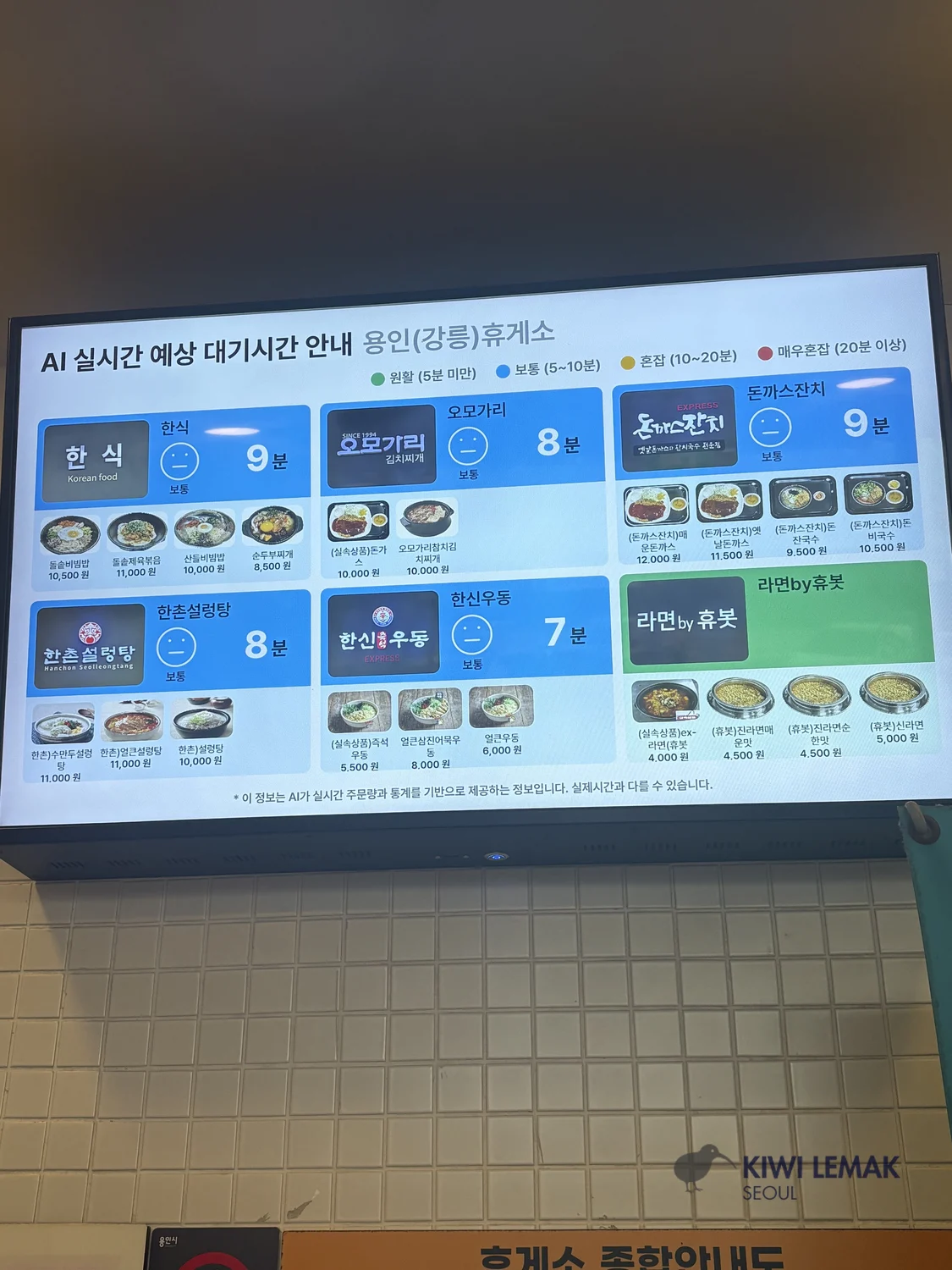
The food court’s own digital menu board — dishes, prices, and a live wait-time estimate per counter.
Fuel and EV Charging
Self-service pumps are the norm, and they’re genuinely self-explanatory once you’ve done it once: select fuel type, choose a payment method, then either a preset amount or “Full.” On the pump we used, the payment screen listed a fourth option alongside card, Samsung Pay, and cash: settling an unpaid highway toll on the spot. Korea’s highway toll operator does list rest areas generally among its official channels for checking and paying an outstanding toll — we can’t confirm from official sources that every self-service pump offers this, so if you’re carrying an unpaid toll, ask at the rest area you’re stopped at rather than assuming the pump in front of you will handle it.
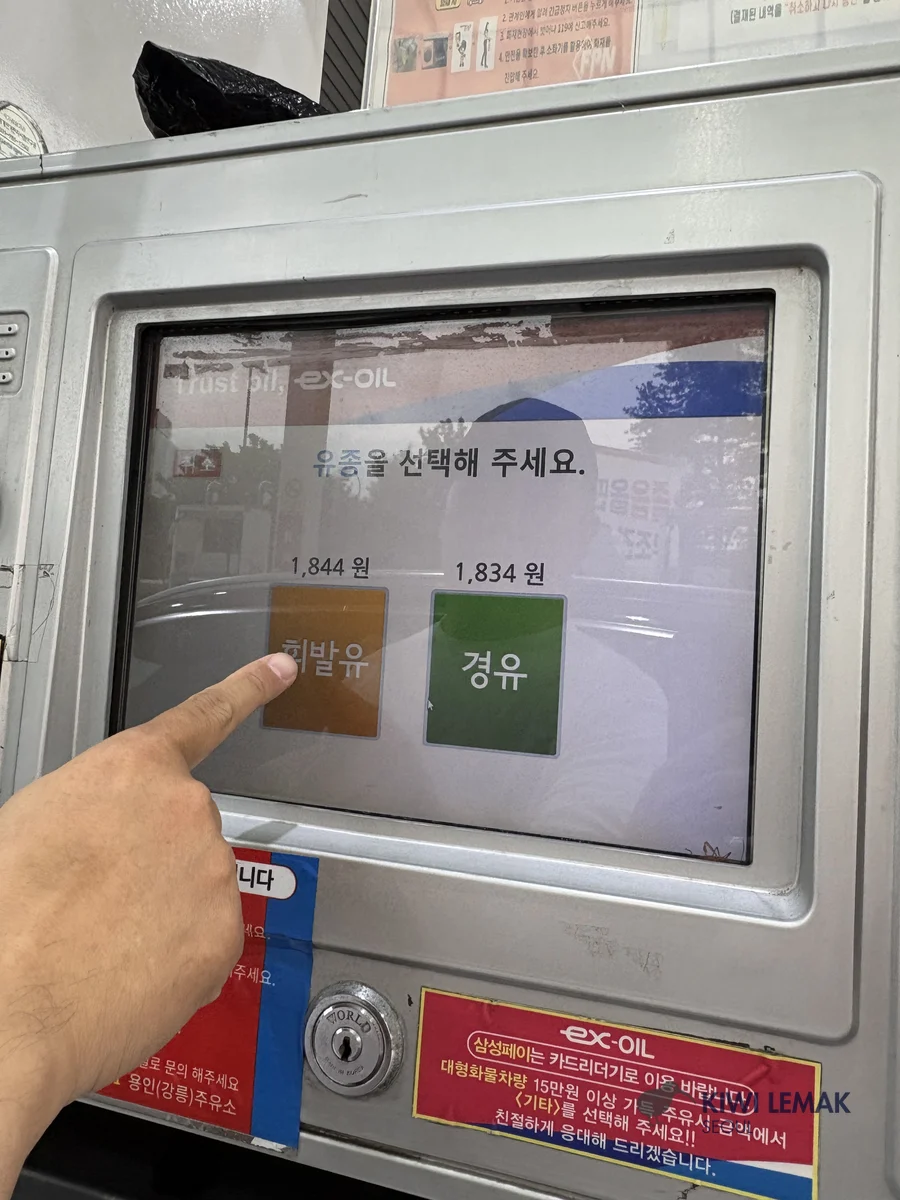
Step one at the pump: choose your fuel type and see the real, current price per litre.
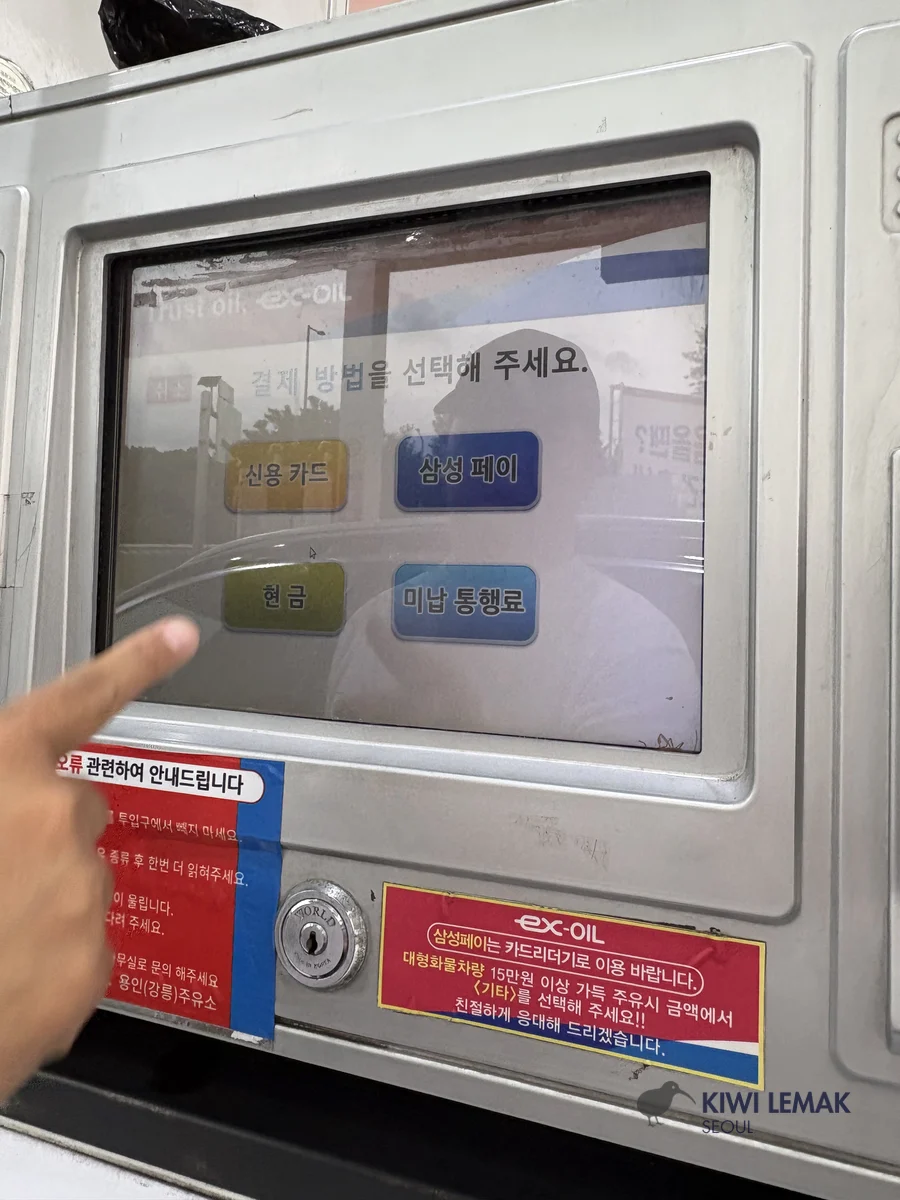
The payment screen — card, Samsung Pay, cash, and that unpaid-toll option sitting right alongside the normal ones.
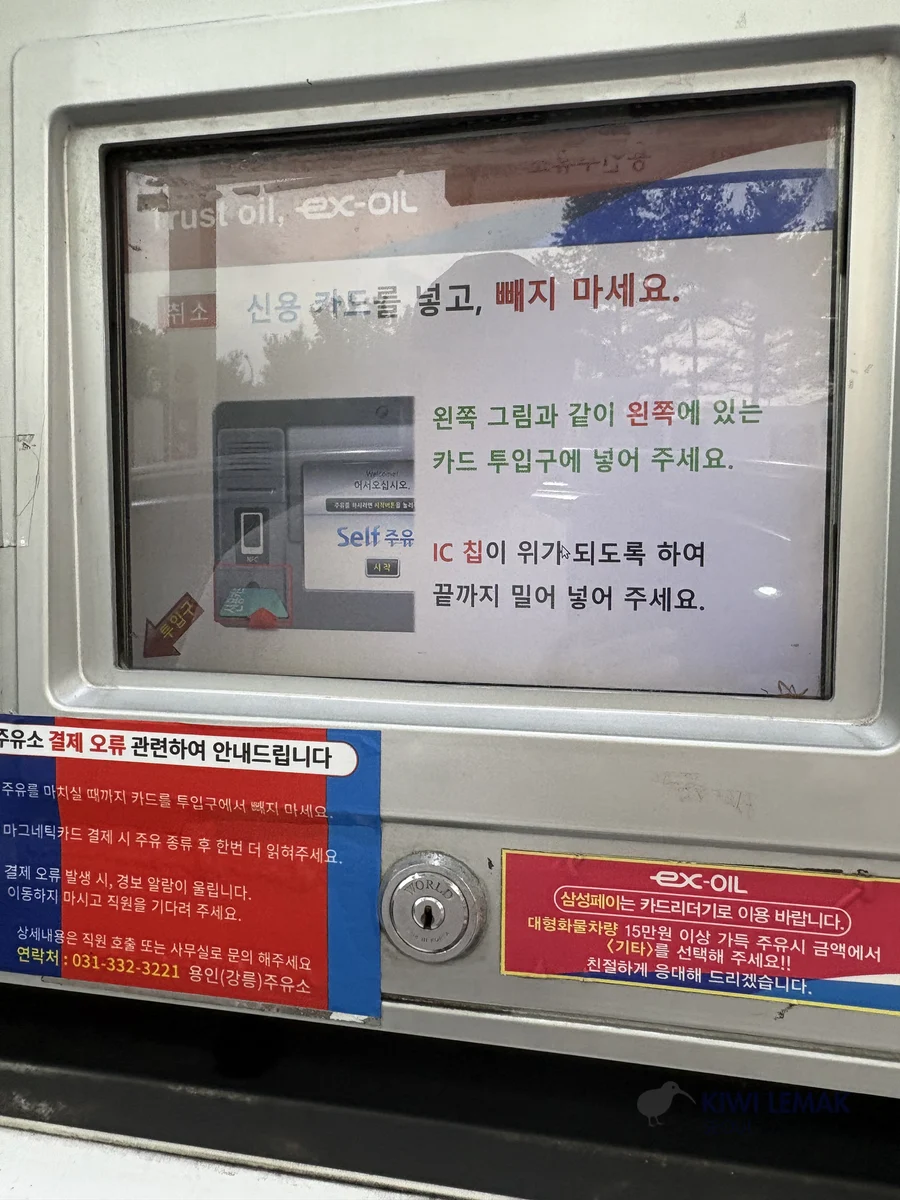
Card insertion is shown step by step on screen — chip up, pushed in fully.
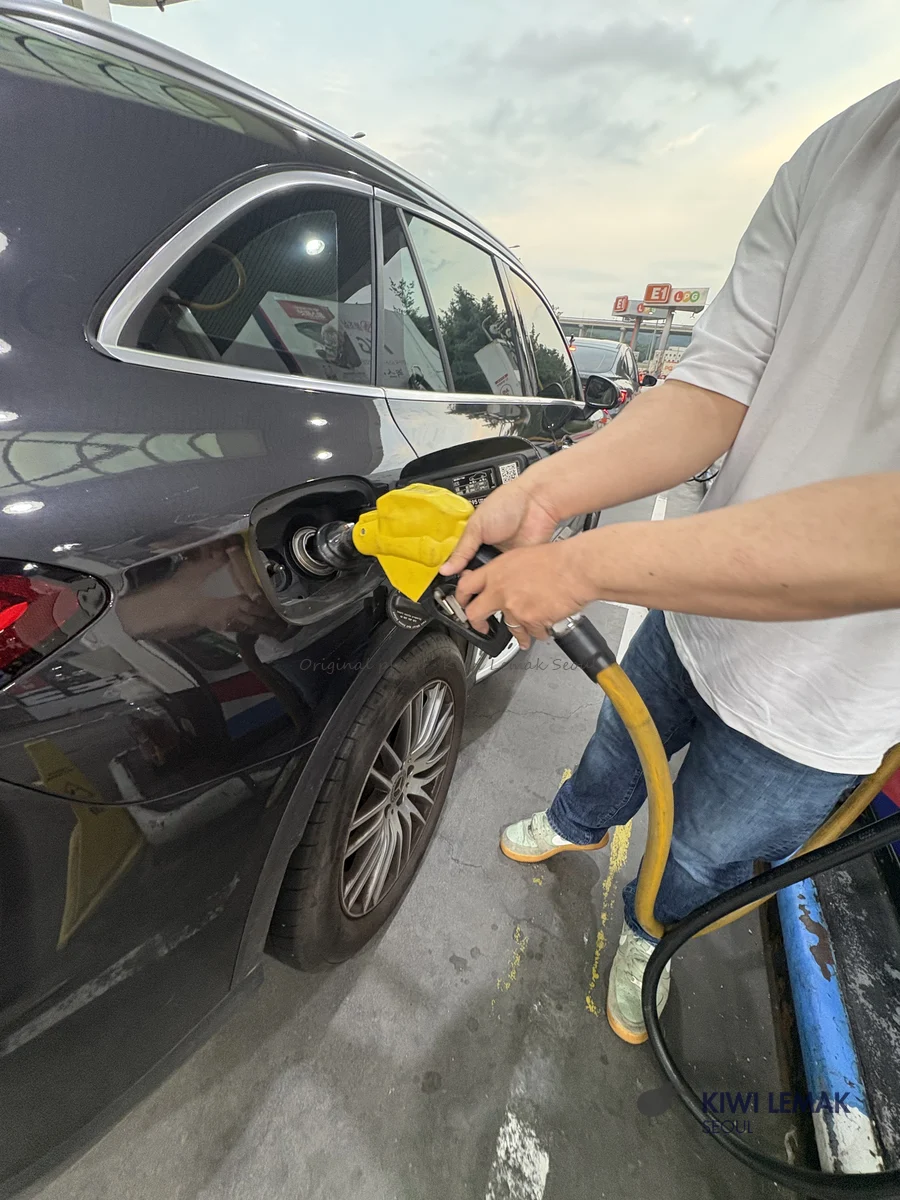
The whole process, start to finish, takes about as long as it does anywhere else — the extra steps are on the payment screen, not the fuelling itself.
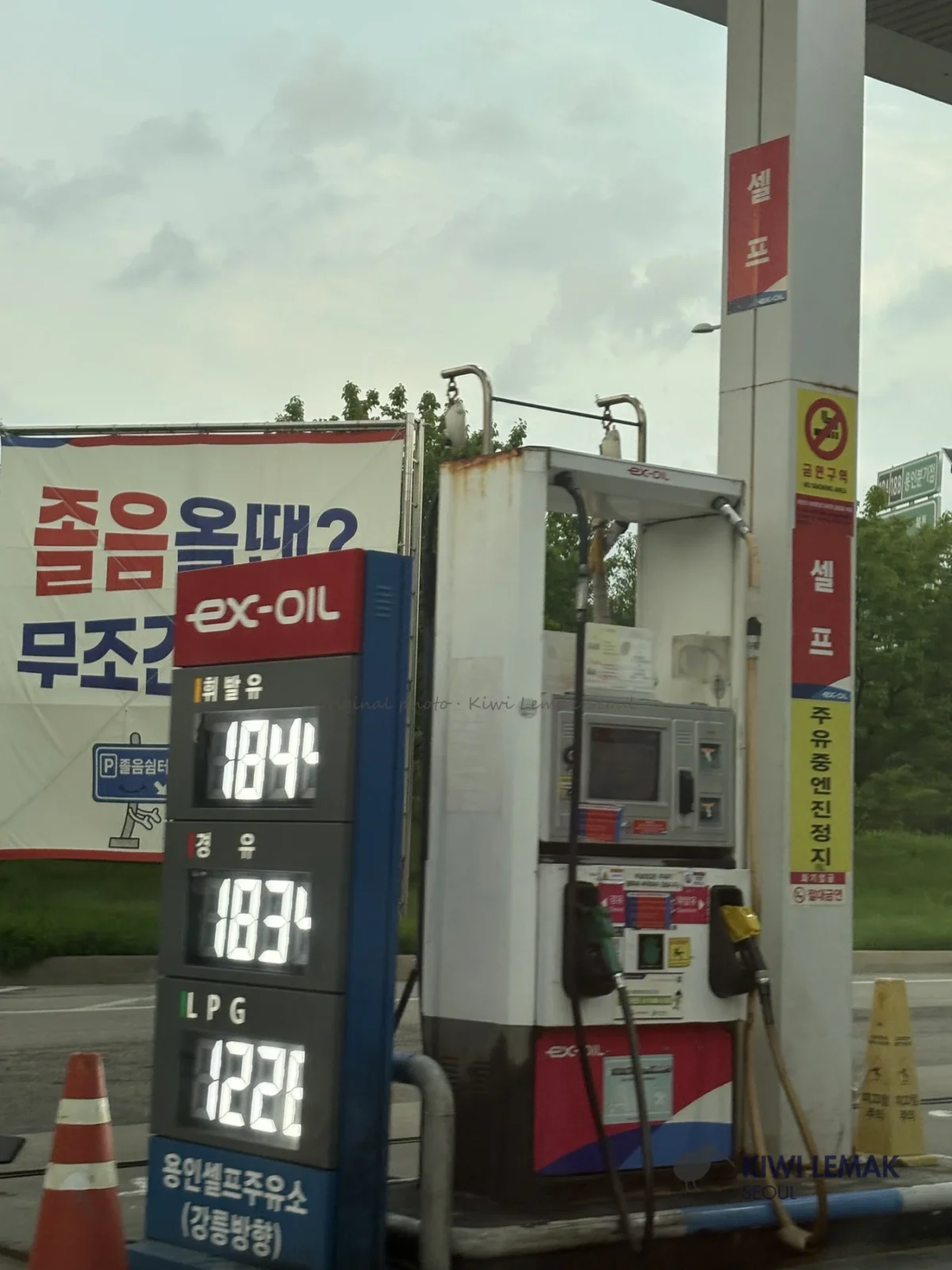
Many rest-area stations operate as “ex-oil” 알뜰주유소 (Ex-oil discount stations) — a Korea Expressway Corporation-linked, bulk-purchasing program, listed as such on the operator’s own site. Whether it comes out cheaper than a regular station on any given day varies by station, fuel type, and timing — the reliable way to know is the price board every pump displays, like the one photographed at the top of this guide, not an assumption that highway fuel is automatically the cheaper option.
EV charging already exists at a number of rest areas, and Korea Expressway Corporation continues to expand the network — including a newer fast-charging contract covering roughly 29 more rest areas nationwide, awarded in 2026 and still under construction as of this writing, not yet confirmed open at those specific sites. Coverage and connector types (including Tesla’s NACS standard, which some new installations are adding) vary by location and change as sites come online, so the reliable way to plan a charging stop is the Ministry of Environment’s official EV charger map (무공해차 통합누리집, ev.or.kr), which shows live status and connector type per station, rather than relying on which rest areas had a charger last time you checked.
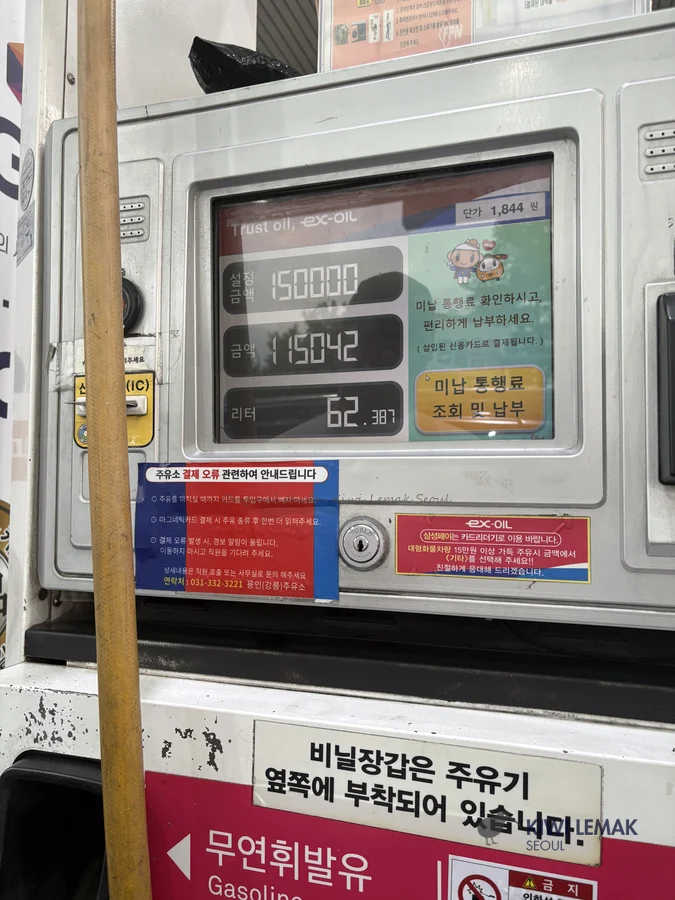
A real fill-up’s final numbers — preset amount, amount charged, litres dispensed, and the per-litre price, all on the pump’s own readout.
Food
Beyond the sit-down food court, most rest areas also run a “hot bar” snack counter — corn dogs and similar quick food, cooked to order — and self-order kiosks are increasingly common at individual counters within the food court, several of them multi-language by default.
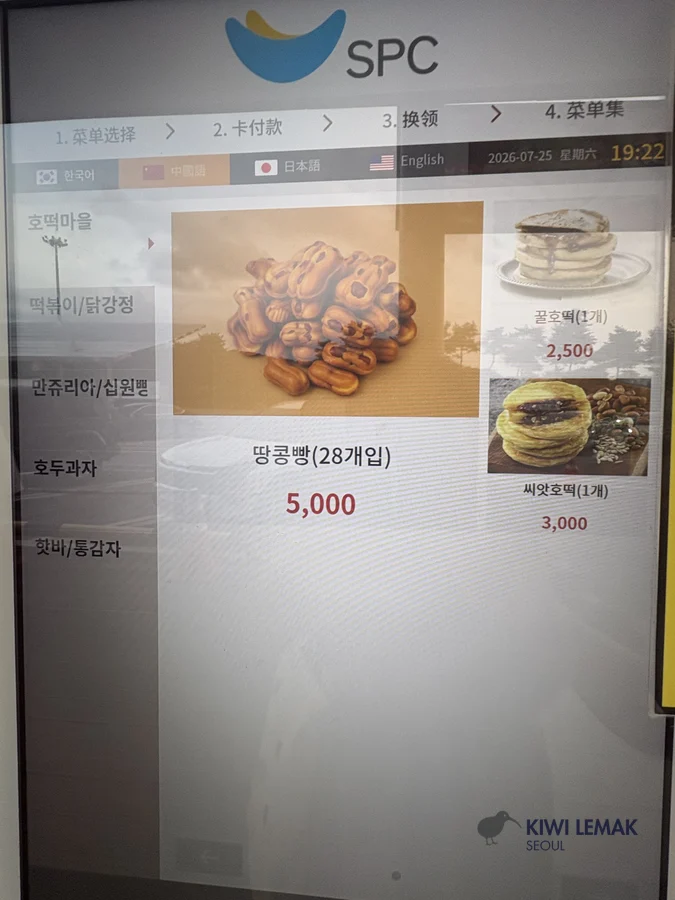
A self-order kiosk at one of the food counters — this one switches between Korean, Chinese, Japanese, and English.
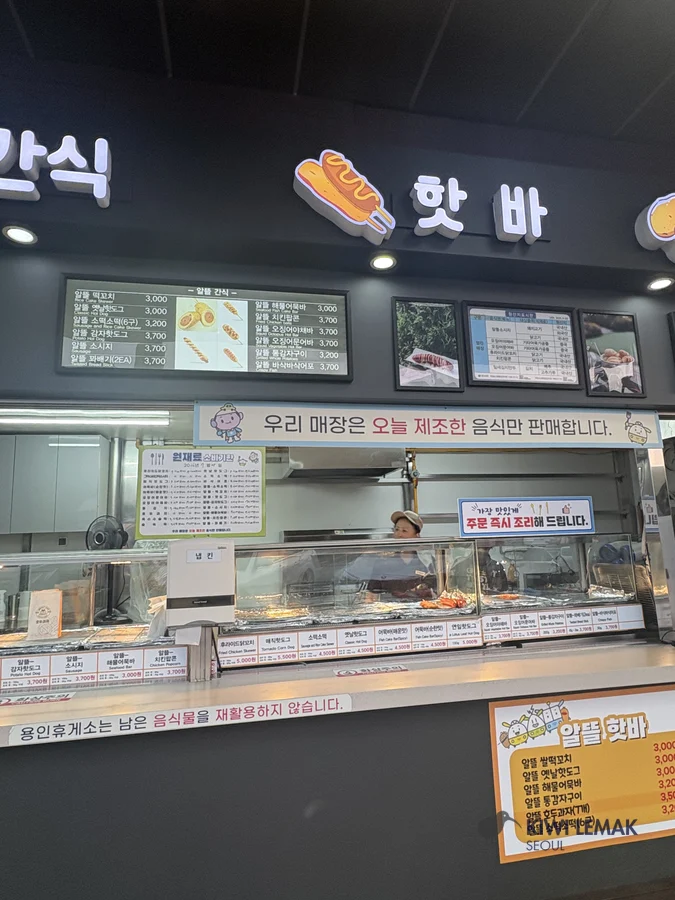
The hot bar snack counter’s own priced menu board — quick food, ordered and paid for directly at the counter.
Restrooms and Other Facilities
One small system worth knowing before you need it: stall doors carry a flip-card sign indicating whether that stall is in normal working order, with a facility contact number to report a problem — not something every country’s rest-stop restrooms have, and easy to misread as just decorative if you don’t know to look for it. Larger rest areas also stock accessibility provisions that go beyond what most visitors expect from a highway stop: an AED (automated defibrillator) cabinet with bilingual instructions, and a free rental cabinet for wheelchairs, crutches, and strollers, available to any visitor who needs one.
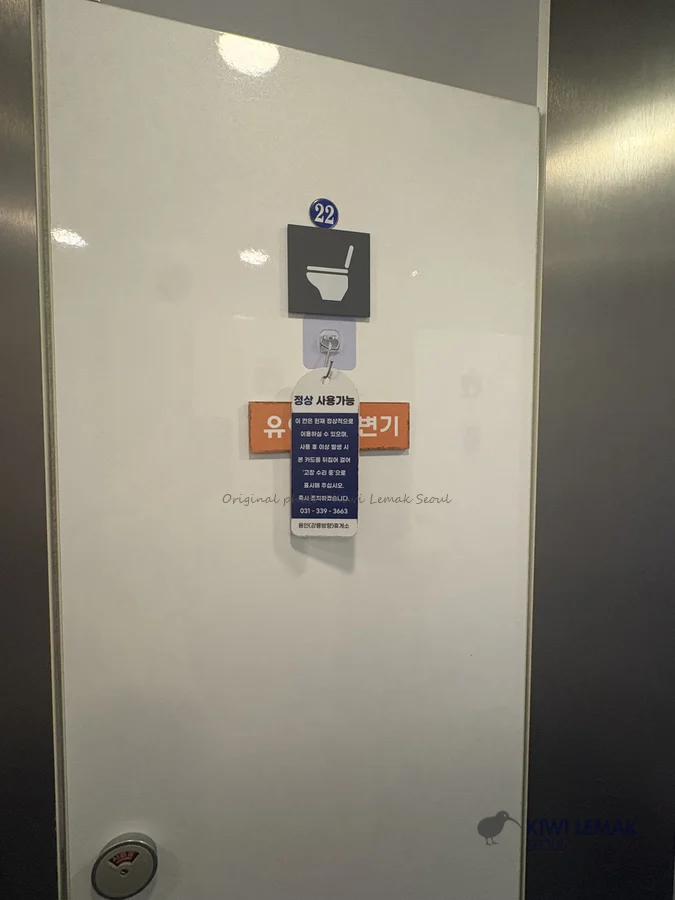
The stall-status flip-card system — flip it to report a fault, with the facility’s own contact number printed on it.
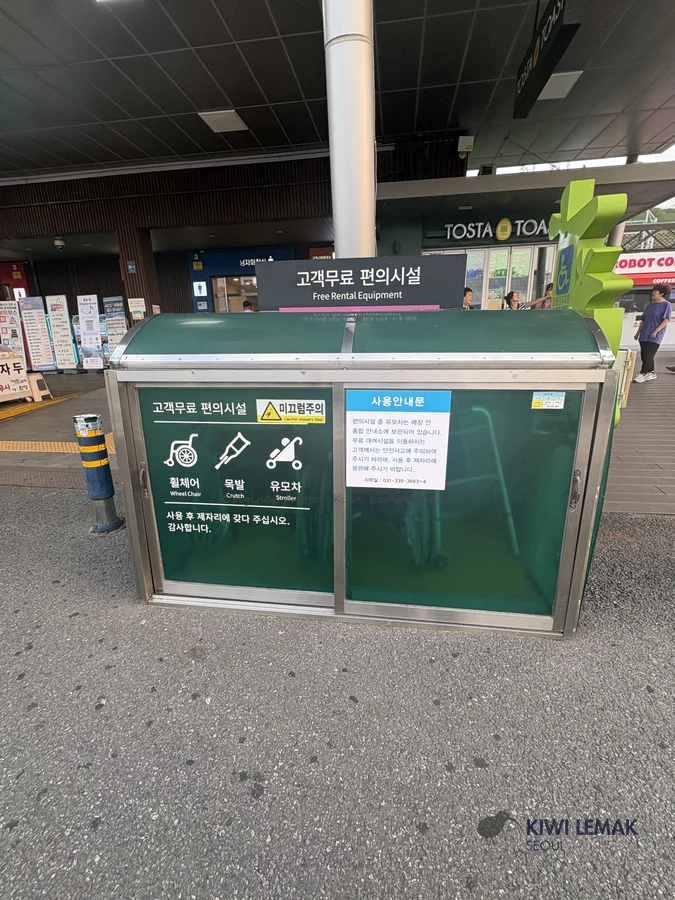
Free rental equipment — wheelchairs, crutches, strollers — available to any visitor who needs one, no charge.
What Catches Foreign Visitors Off Guard
The two things most likely to trip up a first-time visitor are both about access, not language: you can’t drive onto a rest area from a normal local road — it only connects to the expressway itself, in one direction of travel — so if you need something from a specific rest stop, you generally have to already be on that stretch of highway going the right way. And self-service is the default at the pump, not an option alongside staffed service, so it’s worth doing your first fill-up when you’re not in a hurry, reading the screen rather than guessing at it. Past that, the multi-language kiosks, the bilingual emergency signage, and the fact that “just a gas station” turns out to include an AED and free mobility-equipment rental all make these far more built-out than the term “rest area” suggests.
Over to You
The unpaid-toll option on the pump screen was the detail that stuck with us most — a small piece of joined-up infrastructure we didn’t expect from what looked, from the outside, like an ordinary gas station.