EDUCATION IN KOREA
DAYCARE IN KOREA
You are viewing: Daycare → Daily Routine → What Do Kids Eat at a Korean Daycare?
Daycare in Korea
What Do Kids Eat at a Korean Daycare?
Meals, snacks, and the real tray that comes home empty — what actually gets served at 어린이집, and why you probably don’t need to pack lunch.
✓ Quick Answer
Almost every Korean daycare provides all meals and snacks as part of the day — a hot lunch plus a morning and afternoon snack, usually Korean home-style food (rice, soup, kimchi, and a few side dishes). You generally don’t need to pack lunch, and a meal plan is usually sent home or shared through an app.
- Lunch plus two snacks a day, included as standard
- Menus follow a Korean home-style pattern: rice, soup, kimchi, banchan
- Smaller centers get outside nutrition/hygiene support from the government
- A monthly meal plan is usually sent home or posted in an app
- Packing lunch yourself is the exception, not the norm
- Some kimchi/spice exposure early on is normal, not a mistake
Our Real Experience
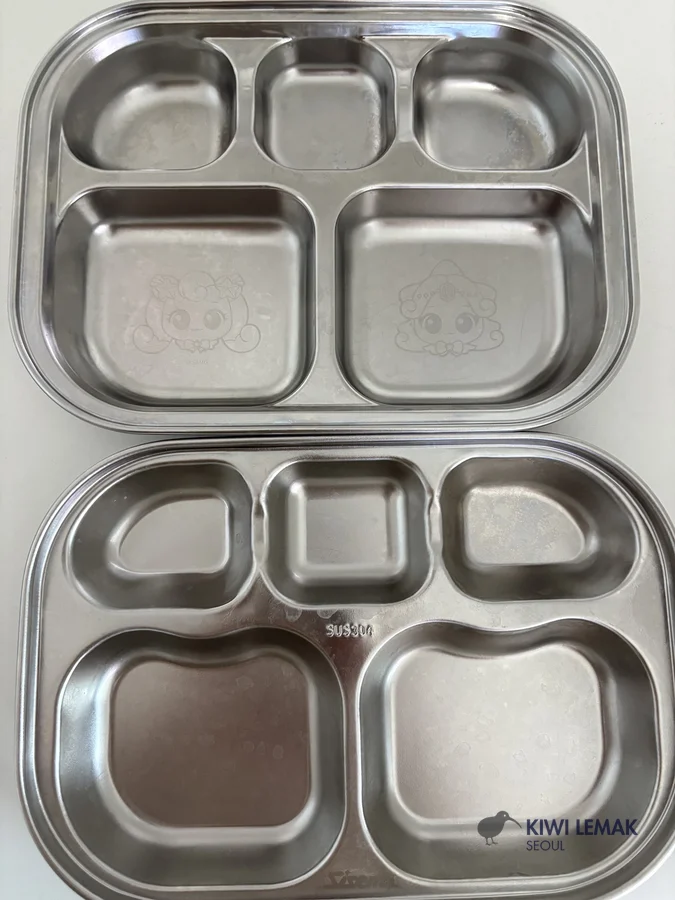
This is the actual lunch tray from our daughter’s daycare bag — not a stock photo. It comes home rinsed and empty most days, which was our first real clue that meals weren’t something we needed to think about every morning.
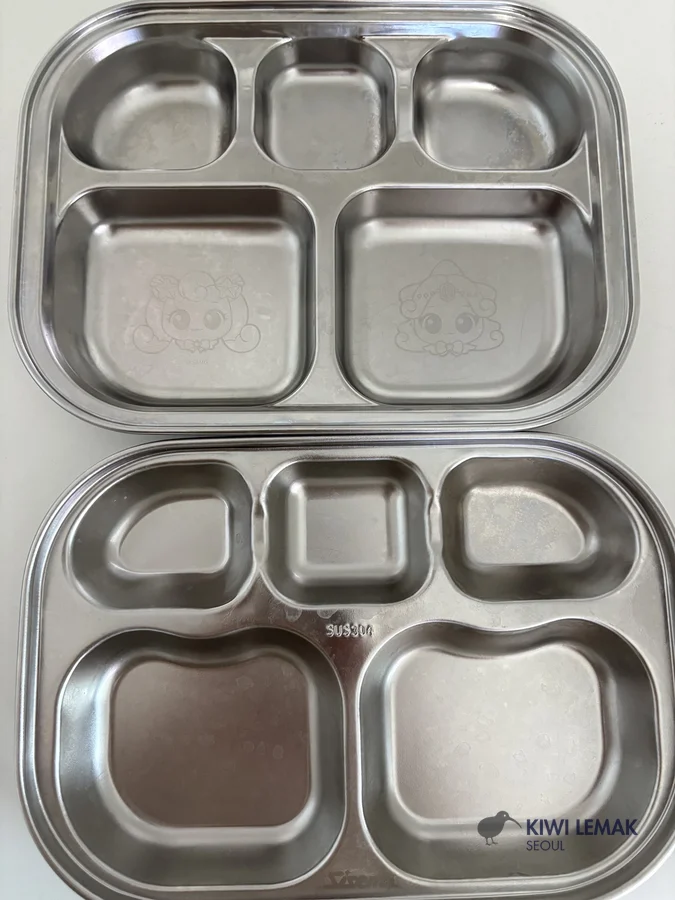
We didn’t have to source it, wash it daily, or plan what went in it. That’s the part foreign parents used to a “pack a lunchbox” culture tend to find most surprising.
What’s Actually on the Menu
Korean daycare food generally follows the same pattern as a home-style Korean meal: rice, a soup or stew, kimchi, and two or three side dishes (반찬), adjusted for age — softer textures and simpler seasoning for younger toddlers, closer to a regular adult meal by the time a child reaches the older classes.
Kimchi shows up earlier than a lot of foreign parents expect. It’s not an oversight — it’s treated as a normal part of introducing a child to Korean food, the same way rice or soup is.
What She Actually Ate
Soups were the reliable win for us — miyeok-guk (seaweed soup) and steamed egg both got finished without a fight. Namul side dishes were the opposite story; those still tend to come back on her plate even now. The genuinely useful part: the teachers were the ones who got her to try mushrooms and fish for the first time, not us. She still eats both happily today.
The Part Most Parents Don’t Know About
Smaller daycares without their own nutritionist aren’t left to figure out food safety alone. Korea runs a national network of 어린이급식관리지원센터 (Children’s Foodservice Management Support Centers), operated under the Ministry of Food and Drug Safety, which provide hygiene and nutrition management support specifically to childcare centers that don’t have a dedicated nutritionist on staff. It’s a real, government-run system — not a marketing claim any individual daycare makes about itself.
 Andrew’s Note
I remember being about to eat a sandwich around noon when a photo came through of what she was having for lunch that day. Fair to say I was a little jealous — I basically wanted to enroll myself.
— Andrew
What Foreign Parents Should Know
- Ask for the monthly meal plan up front so you know what’s coming, not just what already happened.
- Don’t be surprised if kimchi or spicier banchan appears early — it’s introduced gradually, not accidentally.
- If your child has a food allergy, tell the center directly and in writing — most take it seriously and adjust the tray.
- You generally don’t need to send lunch, but confirm with your specific center during enrollment.
- Ask about snacks too, not just lunch — the morning and afternoon snack are part of the same meal plan.
FAQ
Do I need to pack my child’s lunch for Korean daycare?
No, in nearly all cases. Meals and snacks are provided by the center as a standard part of enrollment, not an extra service you arrange yourself.
What kind of food do Korean daycares serve?
Typically Korean home-style meals — rice, soup, kimchi, and a few side dishes (반찬) — adjusted for age, with softer textures and simpler seasoning for younger toddlers.
Are Korean daycare meals safety-checked?
Many smaller centers without their own nutritionist are supported by a government-run 어린이급식관리지원센터 (Children’s Foodservice Management Support Center), which provides hygiene and nutrition oversight under the Ministry of Food and Drug Safety.
How do I find out what my child eats each day?
Most centers send home a printed or app-based monthly meal plan, and some post daily meal updates through apps like KidsNote.
Over to You
Has your child surprised you with what they’ll eat at daycare that they’d never touch at home?