English Kindergarten in Korea
A Real Day at English Kindergarten in Korea: Timetables, “English Only” and What Kids Actually Do
Two very different daily routines, three different answers to what “English only” really meant, and what actually filled the hours in between.
This is the question we’d tell another foreign parent to spend the most time on, because it’s the one where the label misled us more than once: “English only” turned out to mean three genuinely different things at three different schools we’ve been through.
English only when, exactly? Ask that specifically — during lessons, during breaks, during play, and about who’s actually speaking English to your child throughout the day — because we found real, meaningful variation in every one of those categories, across programs that all described themselves in similar terms. Don’t assume a “typical” English kindergarten schedule exists either: the two programs we compare below, both under the same general label, ran on genuinely different timetables.
What “English Only” Actually Meant, Three Times
At one program, our daughter attended for about a semester. In practice, very little English was actually being used day to day, despite the program’s framing. We wondered at the time whether Korean was being leaned on heavily to help the Korean-speaking children in the class adjust — that’s our own speculation, not something the school ever told us. It was one of the reasons we eventually moved her.
At her current school, the difference was obvious from day one. English was used well beyond the formal lesson blocks — through breaks, in casual conversation, throughout the day generally. As we understand it, the Korean staff here aren’t the ones teaching the main academic classes. We haven’t run into the same language-use issue since.
At a third, reading-focused program, the school described itself as English-only, but Korean was permitted during break time — already a bit different from what “English only” had suggested. Separately, I had trouble communicating in English with one Korean teacher there: there were times she didn’t seem to follow what I’d asked, or her answer didn’t quite match the question. We’re not naming the school or the teacher. It changed the question we ask schools now: not “are you English-only,” but who specifically teaches the main lessons, and how comfortable the staff who deal directly with children actually are in spoken English, day to day.
Two Programs, Two Very Different Days
Marketing material tends to describe programs in adjectives — “academic,” “play-based,” “balanced.” What actually tells you something is the timetable.
The previous program ran roughly 9:50 a.m. to 2:30 p.m. Mornings were largely textbook-focused, with afternoons shifting into activities like blocks and gym — a more front-loaded academic structure. We don’t have the old timetable anymore, so those hours are from memory.
The current program runs roughly 9:30 a.m. to 3:30 p.m. The day includes writing, a topic-based subject that rotates, gym, lunch, guided reading in the afternoon, and play time. Looking at the real timetable, our first impression was that there’s a surprisingly wide spread of activities in there, but none of the individual blocks run especially long — so the day doesn’t look as exhausting on paper as it had seemed going in.
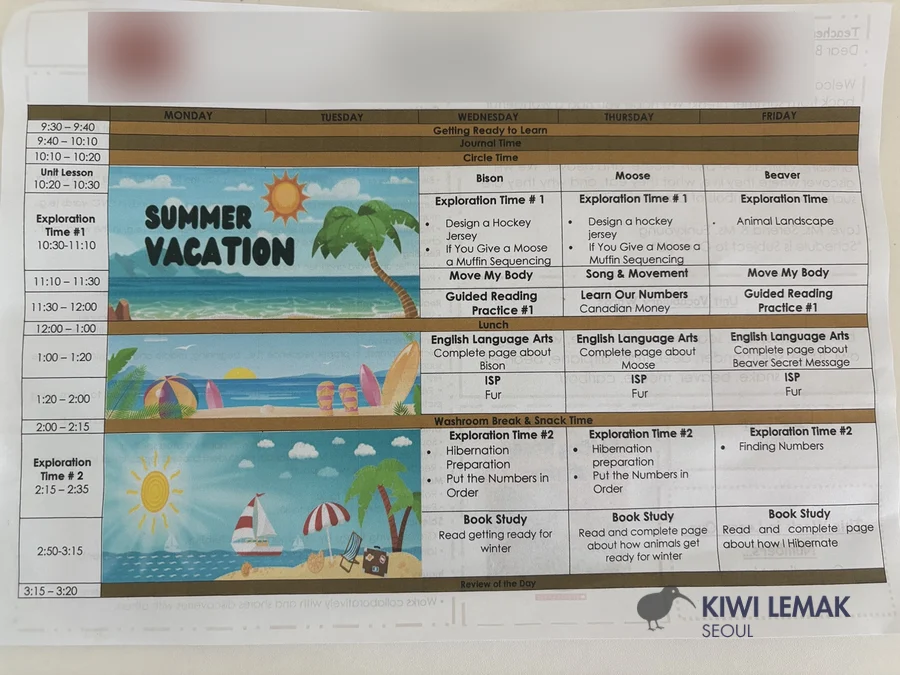
Two schools, same general “English kindergarten” label, and the actual shape of the day wasn’t close to the same. Different total hours, different balance between academic blocks and physical or unstructured activity, different placement of the demanding work within the day. Ask for the actual one, in writing, before you commit — the hour-by-hour timetable, how long individual blocks run, where physical activity and play sit, and whether the schedule shifts by term or age group.
What Fills the Day
The recurring building blocks across our daughter’s programs were literacy and writing, guided reading, topic-based learning, textbook work, gym, and play — the balance between them differed by program. Treat these as examples of what the category can include, not a description of every English kindergarten.
Literacy and writing showed up in both programs we compare above, tied more closely to homework in the more academic one, one part of a broader rotation in the current one. Reading was consistent too, with the reading-focused program leaning harder into it as an assessed skill, versus the current program’s guided reading as one part of the afternoon.
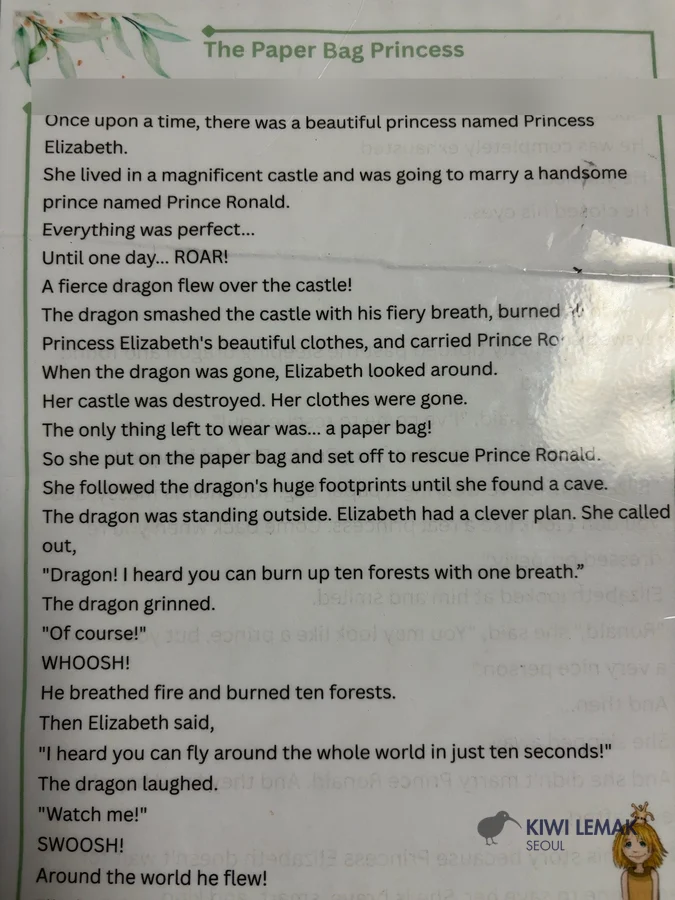
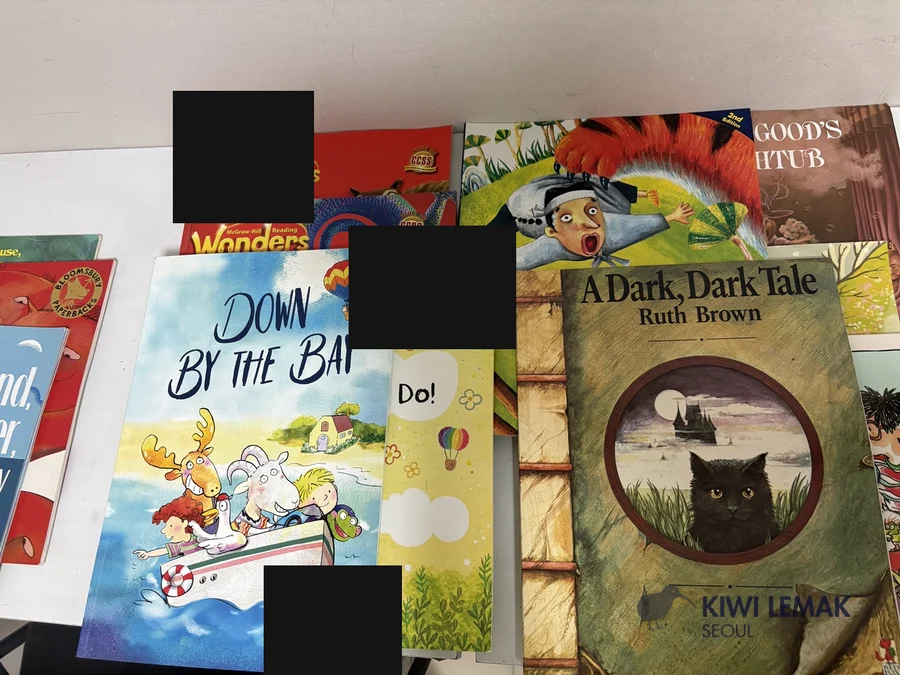
A real completed reading-response worksheet, and the leveled readers used across programs. Personal and identifying details have been removed.
Topic-based learning rotates weekly in the current program — one of the places the more memorable, spontaneous conversations at home have come from (Canadian animals is the one that stuck with us; we tell that story properly elsewhere in this series). Textbook work featured more heavily in the previous, more academic program, particularly in the mornings. Gym appeared in both, positioned differently depending on the overall structure; play is a distinct part of the current program’s daily rotation, and how much of the day it occupies is one of the clearer differences between a more play-based and a more academic program — covered in more depth in our dedicated comparison of the two approaches.
Don’t take any single description — “academic,” “balanced,” “play-based” — at face value. Ask what actually fills the day, in what proportion, and how that balance was decided.
Over to You
Ask what “English only” actually covers. We assumed the whole day. Twice, we were wrong.